Pause to Blossom

A collection of short guided moments

Designed to help you slow down, reconnect with your body, and create a little more space to breathe. Through gentle affirmations, body awareness, and calming reflections, each pause is an invitation to soften, reset, and grow gently.

Anatomy in Bloom

A little color. A little curiosity. A lot of anatomy.

Explore the wonderful world beneath our skin through hand-drawn illustrations, a splash of color, and fun anatomy facts! Anatomy in Bloom brings the muscles and structures of our bodies to life, one colorful discovery at a time.

The Gentle Breakdown

Making wellness a little easier to understand.

From muscle knots and fascia to chiropractic techniques, cupping, K-tape, and more, this series gently breaks down the what, why, and how behind your body and the care we use to support it.
  • • 11/18/26

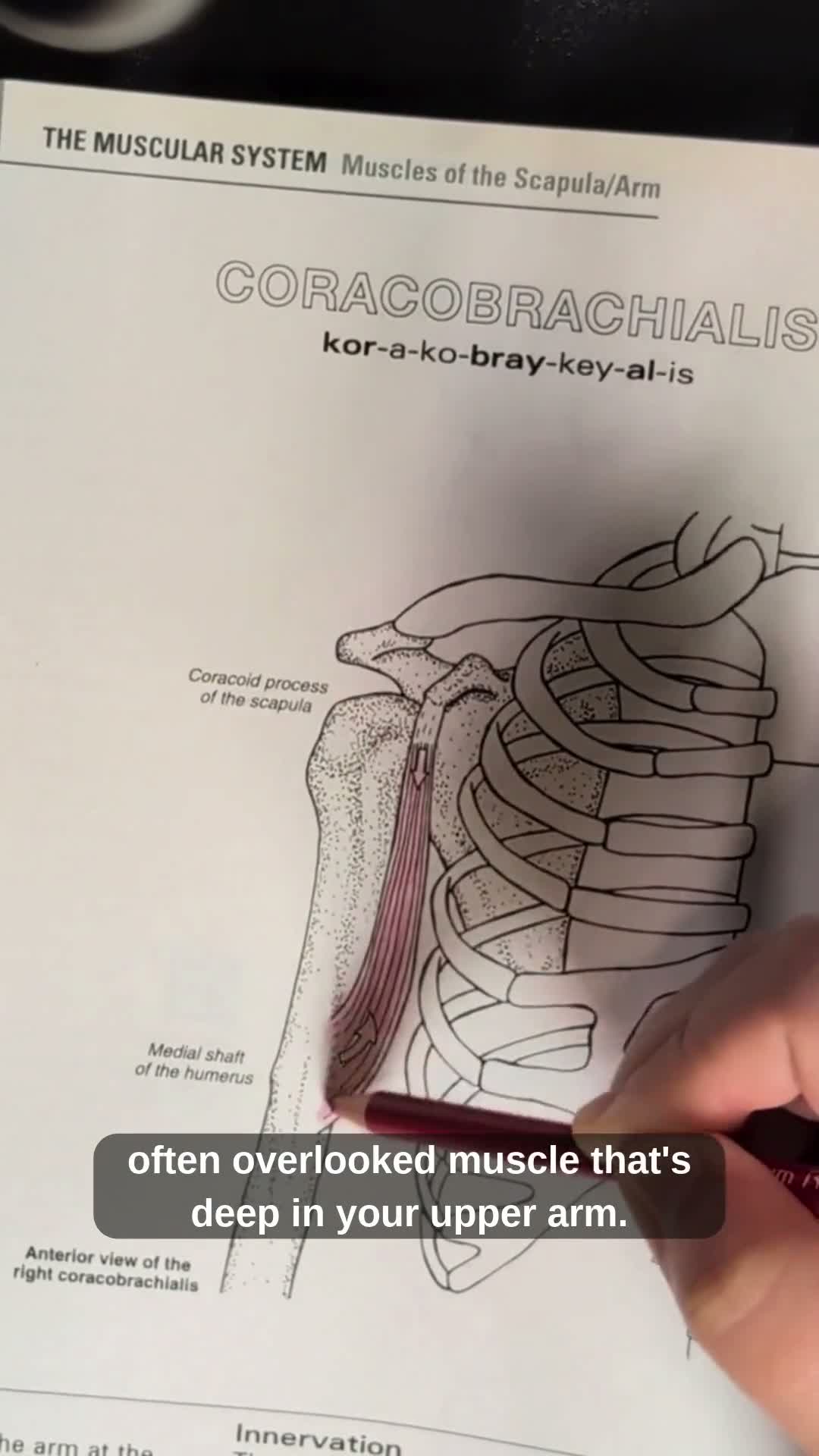
    Coracobrachialis

    The coracobrachialis is one of the lesser-known muscles of the upper arm! It shares an attachment on the coracoid process of the shoulder blade with the short head of the biceps brachii. Despite its small size, it lies deep beneath larger muscles and can sometimes develop tender areas that contribute to discomfort along the front of the shoulder and upper arm.

  • • 11/18/26

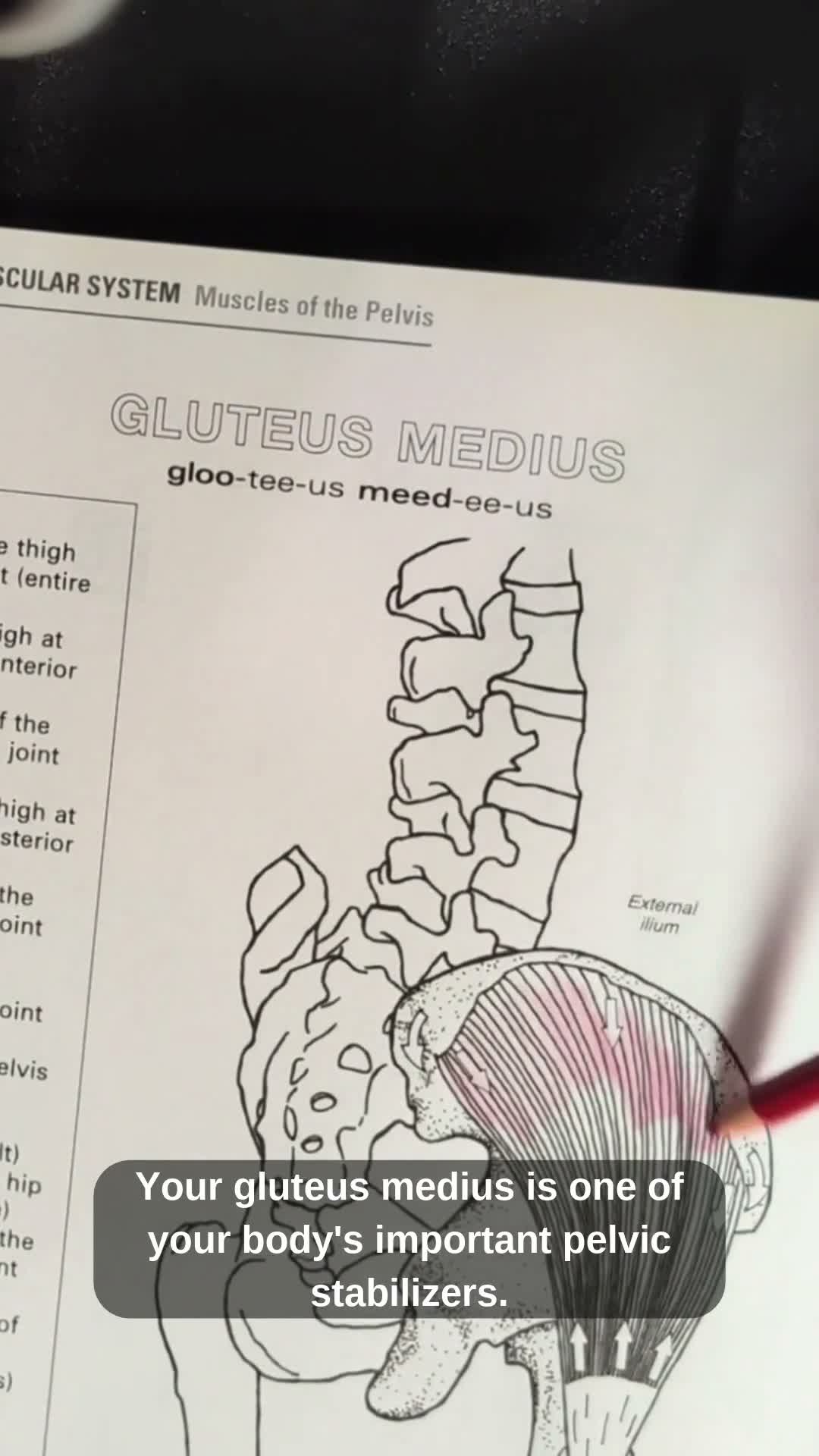
    Gluteus Medius

    Beyond function, the gluteus medius can be a hidden contributor to both hip and lower back discomfort! Sensitive areas within the muscle may refer pain toward the lower back and sacroiliac region, while irritation of its tendon can contribute to pain along the outer hip, especially when lying on that side.

  • • 11/18/26

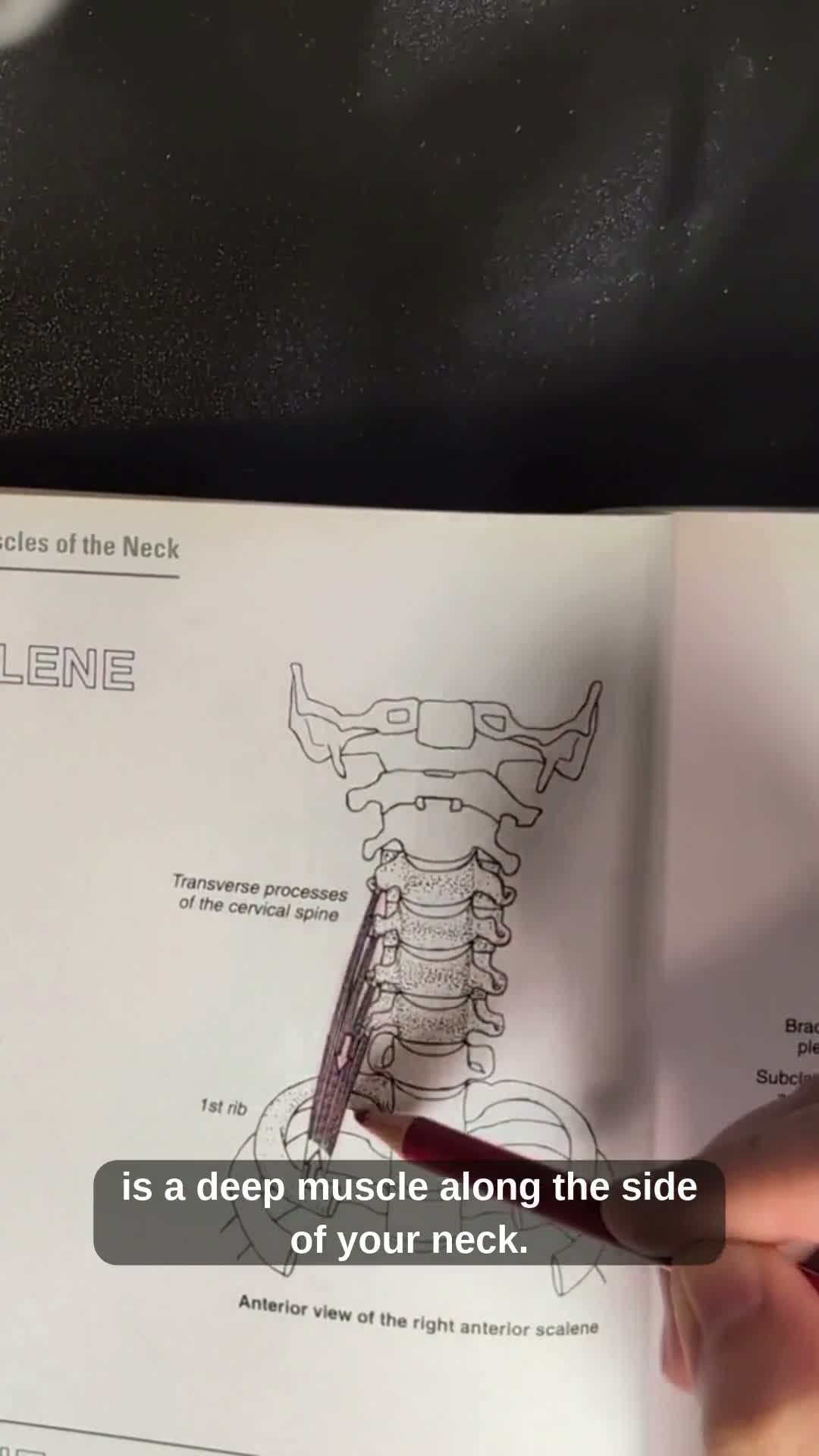
    Scalene Muscles

    Meet your scalene muscles! This group of three muscles — the anterior, middle, and posterior scalenes — runs along the sides of your neck, connecting your cervical spine to your first two ribs. They help bend and stabilize your neck while also assisting with breathing by elevating the upper ribs during deeper breaths.

  • • 11/6/26

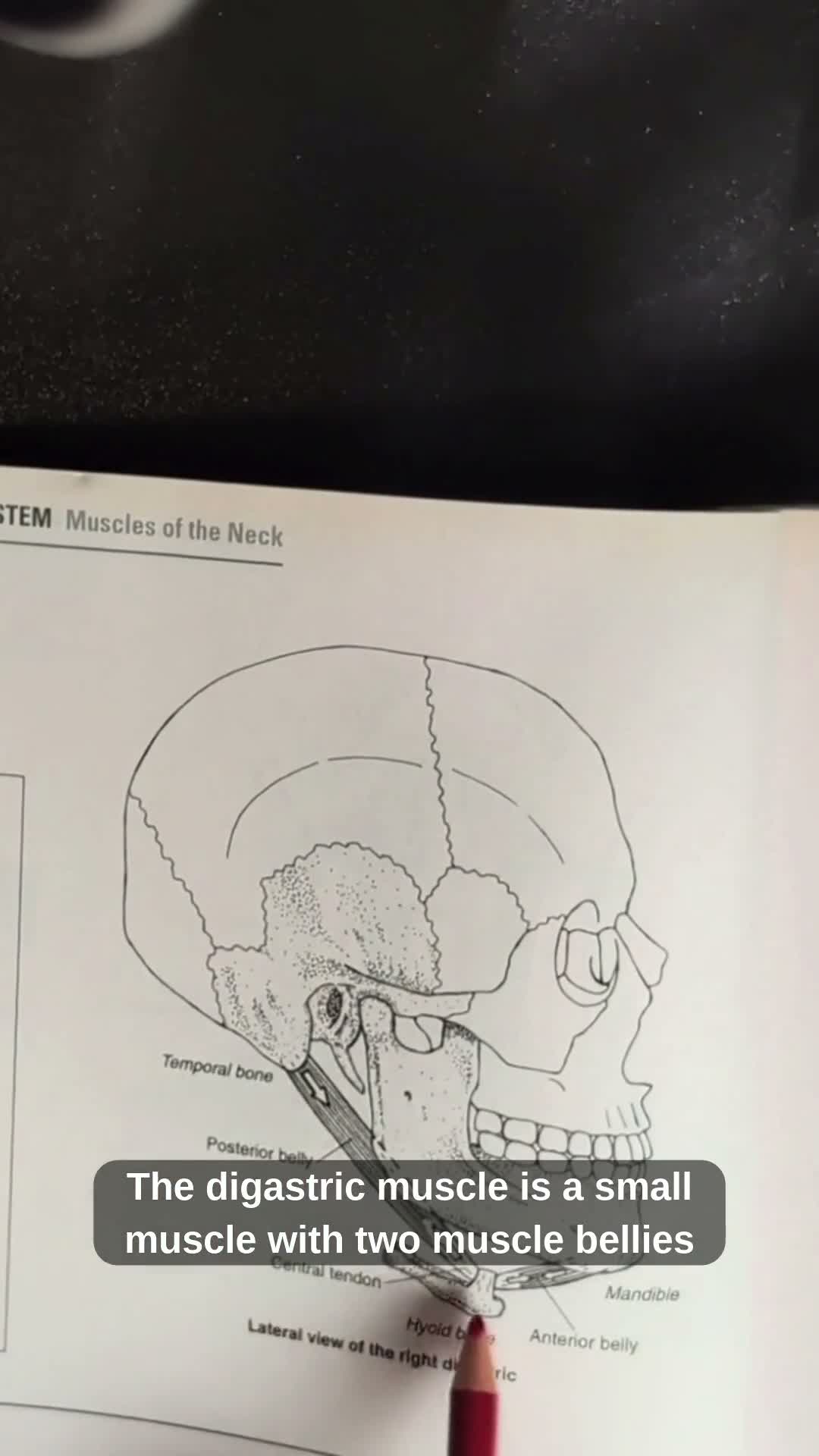
    Digastric

    Unlike most muscles, the digastric has an intermediate tendon connecting its two muscle bellies. This tendon is held near the hyoid bone by a fibrous loop, allowing the muscle to help coordinate movements of the jaw and hyoid during everyday activities.

  • • 11/6/26

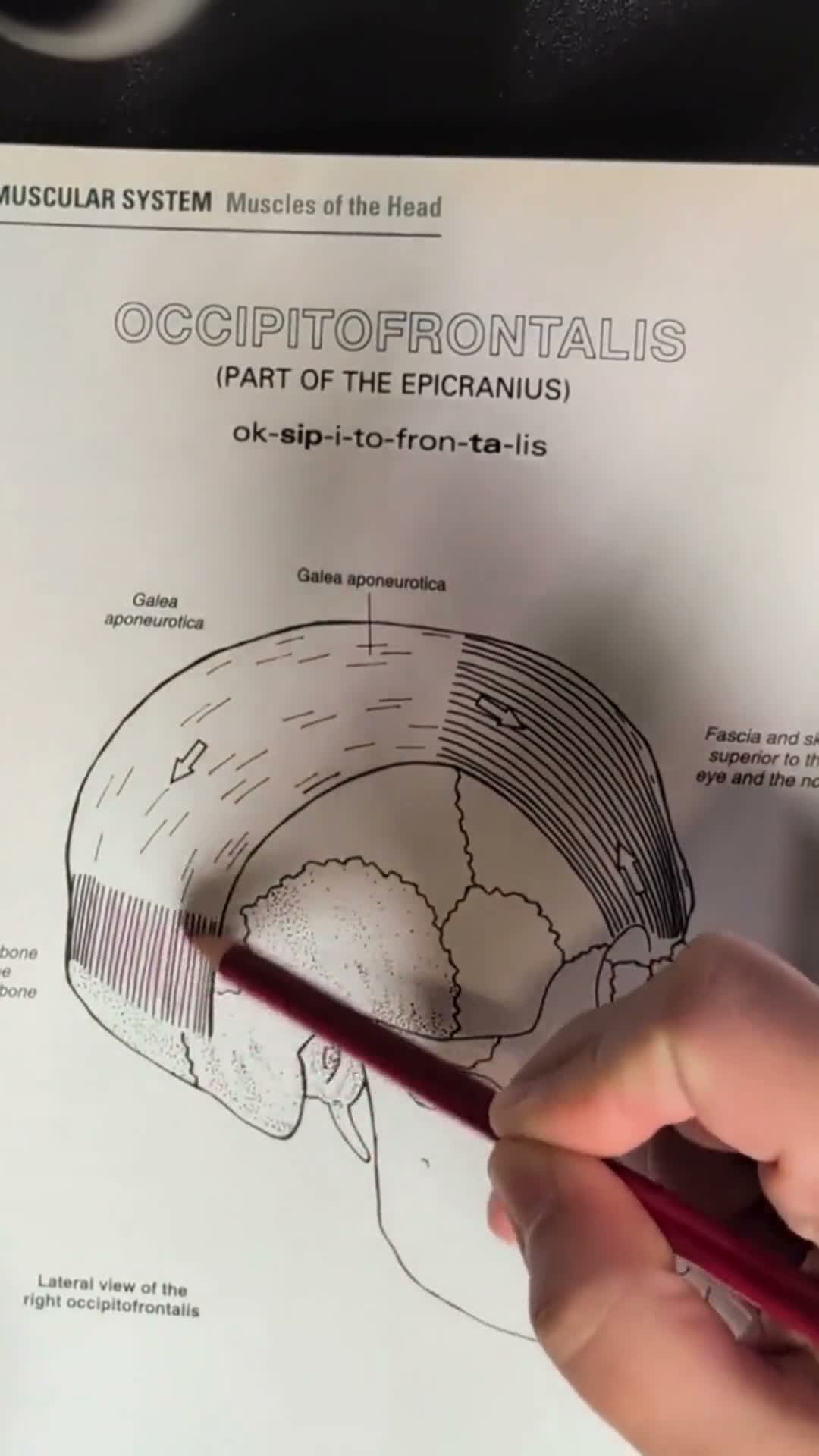
    OccipitoFrontalis

    The occipitofrontalis is a unique muscle that spans the top of your head, connecting the forehead and back of the scalp through a broad tendon-like structure called the galea aponeurotica. Unlike many muscles that move bones, this one primarily moves the skin and soft tissues of your forehead and scalp, playing an important role in facial expression!

  • • 11/6/26

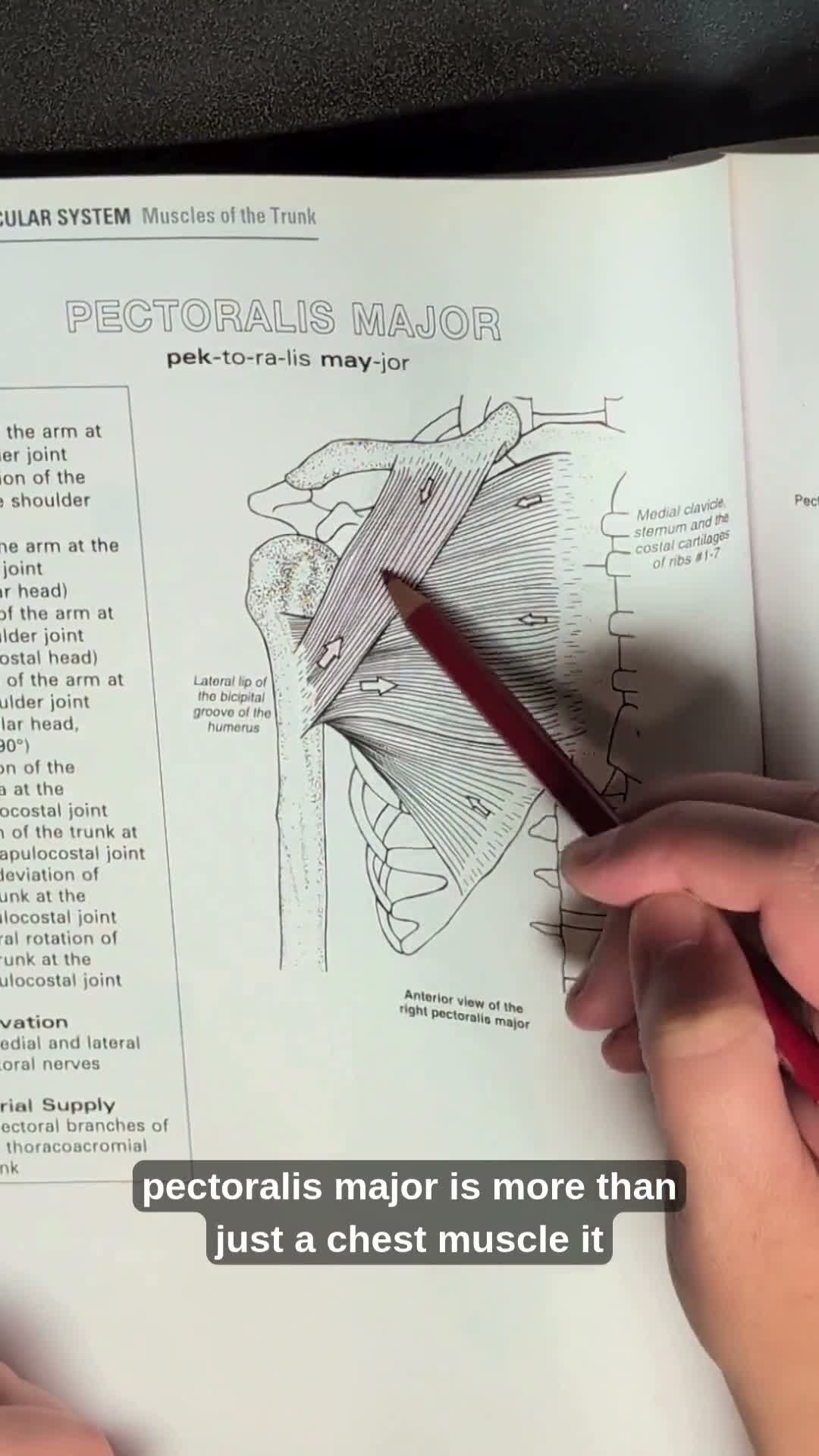
    Pectoralis Major

    Meet your pectoralis major, one of the largest muscles of your upper body! This fan-shaped muscle stretches across your chest and helps bring your arm toward your body, rotate it inward, and move it across your chest. From pushing open a door to giving someone a hug, your pec major plays an important role in everyday movement! #anatomy #knowledge #learnyourbody

  • • 10/20/26

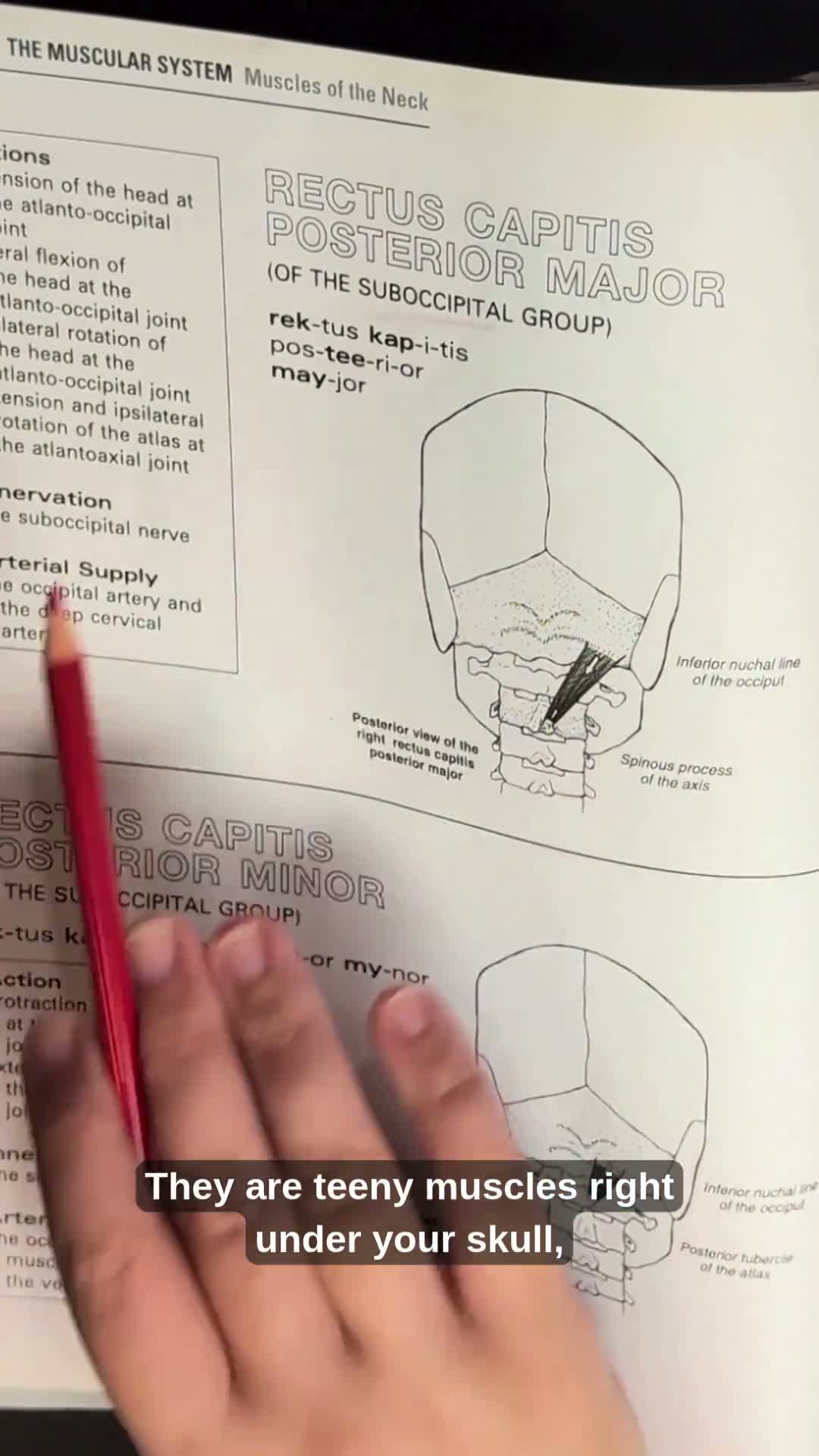
    rectus capitus posterior major and minor!

    Part of your occipital muscle group. These tiny muscles under your skull are the rectus capitis posterior major and minor. They help control small head movements and are packed with sensory receptors that help your brain track where your head is in space!#muscles #anatomy #learn

  • • 10/13/26

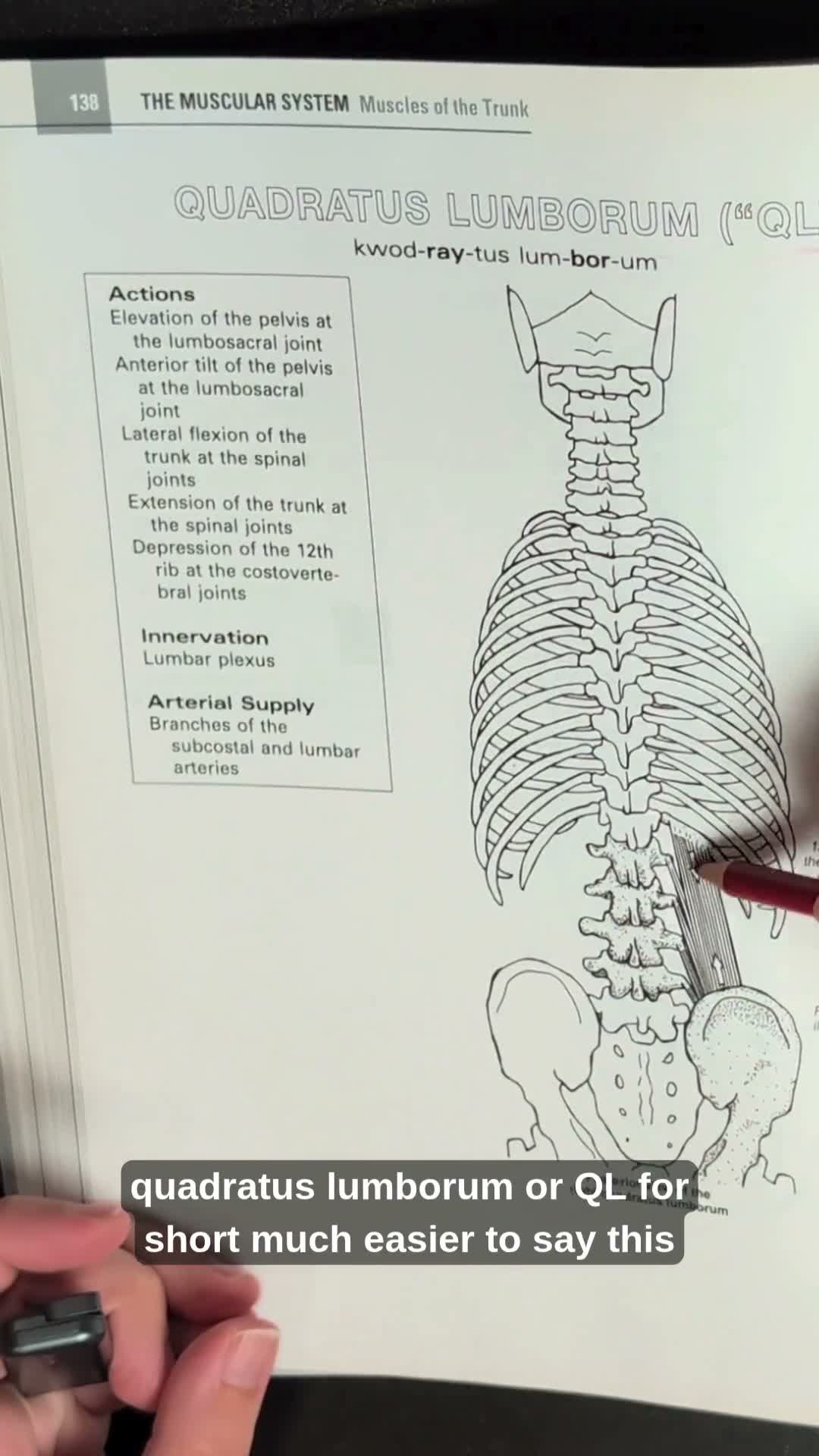
    QL

    Meet your quadratus lumborum, or QL! This deep muscle connects your pelvis, lumbar spine, and 12th rib, helping stabilize your lower back during movement. It also plays a role in breathing by helping stabilize your lowest rib as your diaphragm works.

  • • 10/10/26

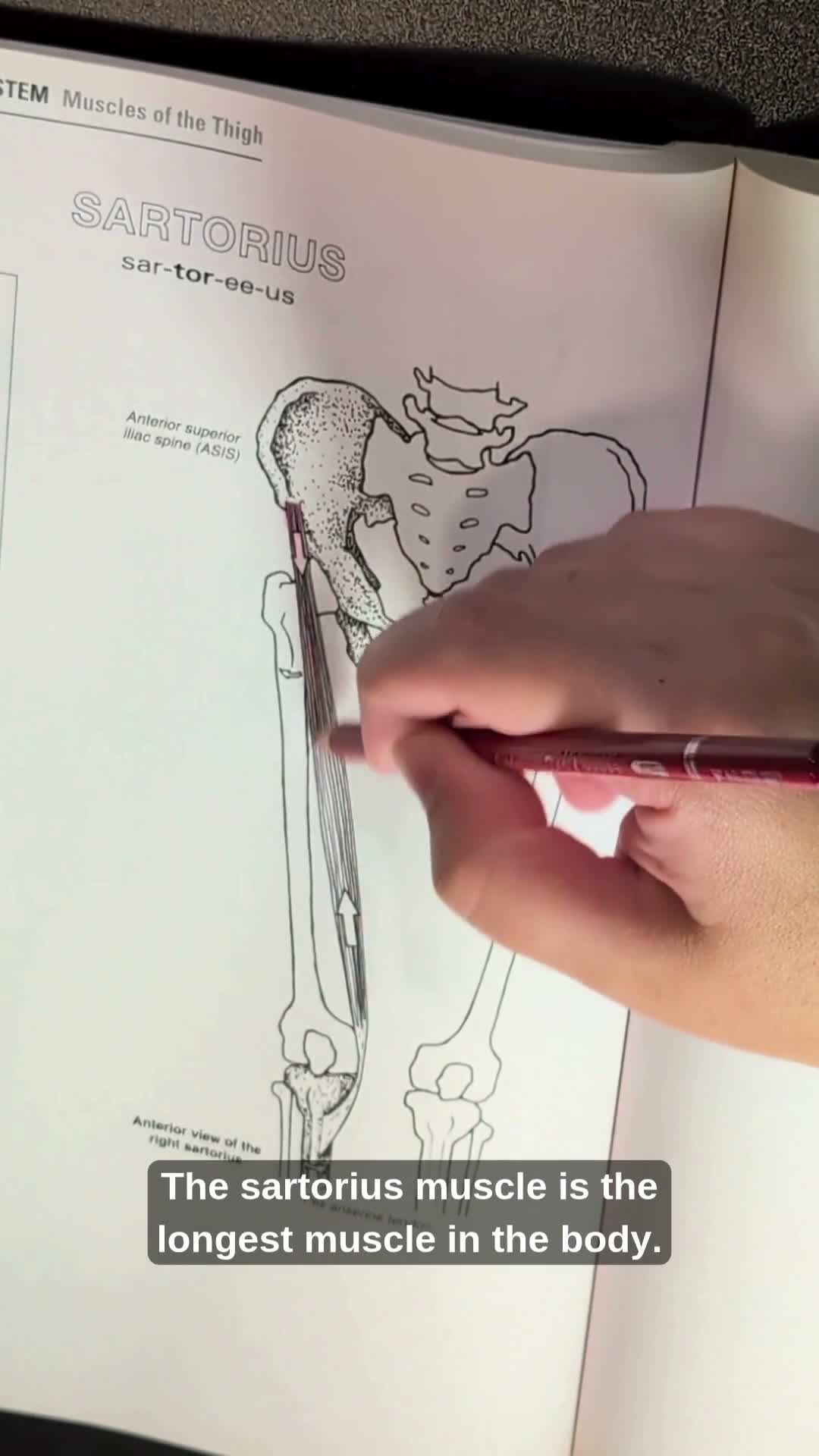
    Sartorius

    1. It's the longest muscle in your body! The sartorius stretches diagonally across your thigh, from the outer hip to the inner knee.

    2. It's nicknamed the tailor's muscle! Its name comes from the Latin word for tailor, referencing the cross-legged sitting position traditionally used by tailors.

    3. It's a multitasker! The sartorius helps flex, abduct, and externally rotate your hip while also helping bend your knee.

    4. It's shaped like a ribbon! Unlike bulky muscles such as the quadriceps, the sartorius is a long, thin, strap-like muscle that travels diagonally across the front of your thigh.

    5. It's part of the pes anserinus! The sartorius joins the gracilis and semitendinosus tendons at the inner knee, forming a structure nicknamed the "goose's foot."

  • • 10/10/26

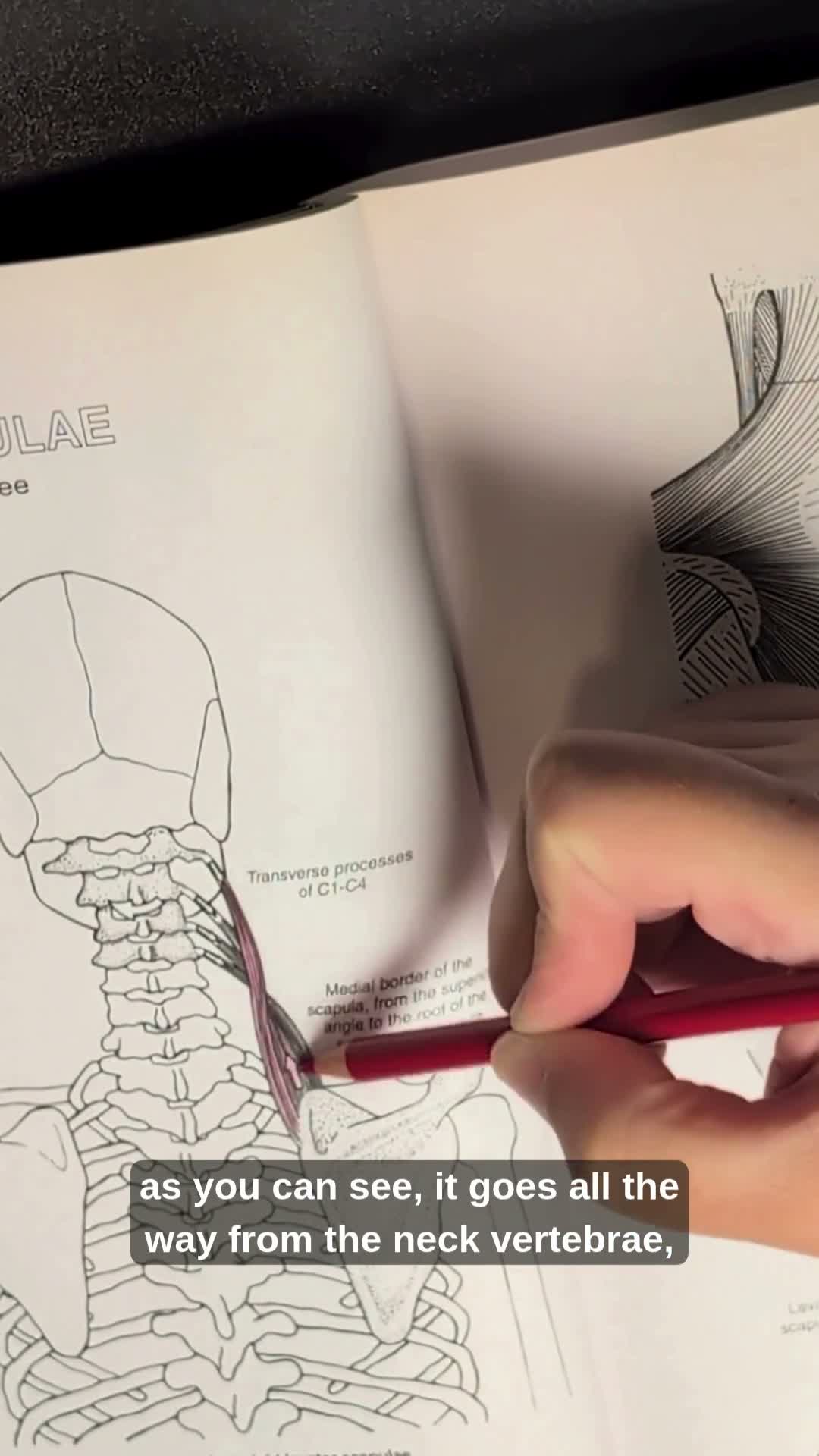
    Levator Scap

    1. Its name tells you what it does! "Levator" means to lift, and "scapulae" refers to your shoulder blade. It's literally your shoulder blade elevator!

    2. It connects your neck to your shoulder blade! The levator scapulae runs from the upper four cervical vertebrae (C1–C4) to the upper inner corner of your scapula.

    3. It's more than a shoulder shrugger! Besides elevating your shoulder blade, it also helps rotate the scapula downward.

    4. It can help move your neck! When your shoulder blade is stabilized, the levator scapulae can assist with side bending and extending your neck.

    5. It's a common source of neck tension! This muscle can contribute to that familiar ache between your neck and the upper corner of your shoulder blade, especially after prolonged static postures.

  • • 10/10/26

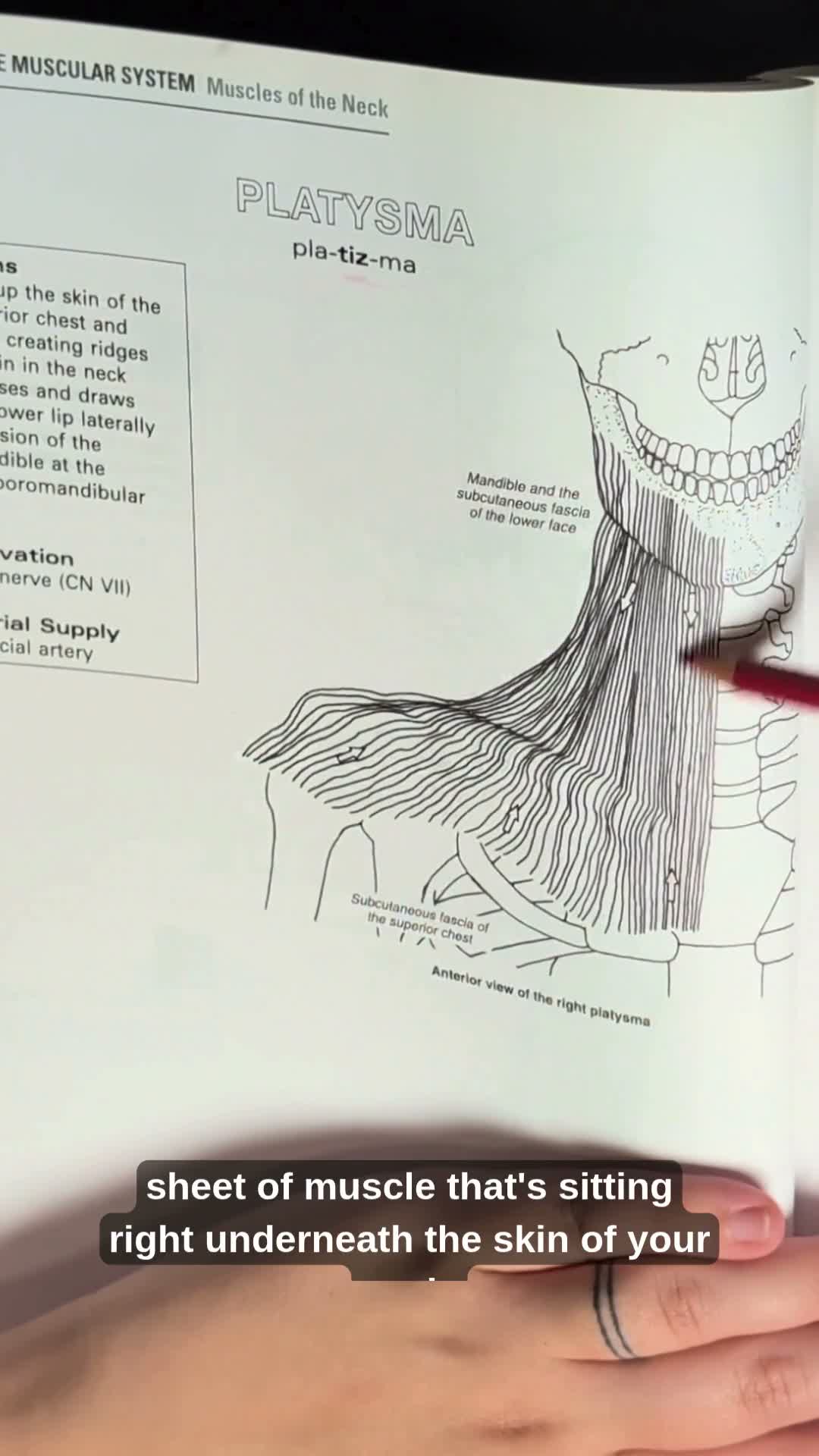
    Platysma

    • It’s not attached to a bone! The platysma is a thin sheet of muscle sitting just under the skin of your neck.

    • It helps create a “grimace.” It can pull the corners of your mouth downward.

    • It can tense your neck skin. Try making a dramatic “ugh!” face — you may see the platysma pop out.

    • It’s a superficial muscle. It sits right beneath the skin, making it one of the easiest neck muscles to see when activated.

    • It reaches from your chest to your face. The platysma extends from the upper chest/shoulder region toward the lower face and jaw.

  • • 10/10/26

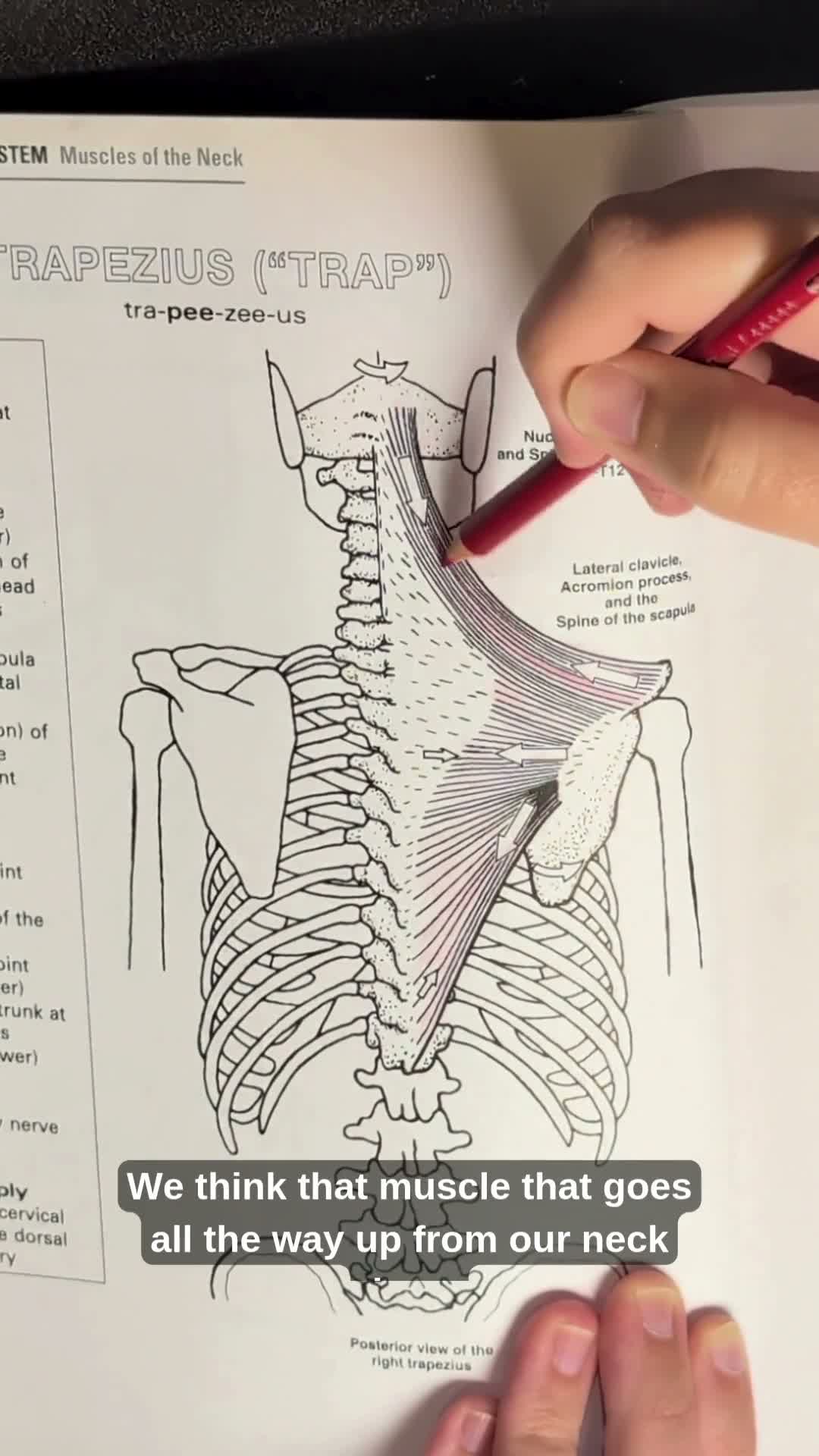
    Trapezius

    1. It's bigger than you think! The trapezius isn't just the muscle between your neck and shoulders. It's a large, diamond-shaped muscle extending from the base of your skull down to your mid-back!

      2. It has three sections! The upper, middle, and lower trapezius work together to move and stabilize your shoulder blades.

      3. It's your shoulder-shrugging muscle! The upper trapezius helps elevate your shoulders, while the middle fibers pull your shoulder blades together and the lower fibers help pull them downward.

      4. It helps you reach overhead! The upper and lower trapezius work with the serratus anterior to rotate your shoulder blade upward when you raise your arms.

      5. It's often blamed for neck tension! While the upper trapezius can contribute to neck and shoulder discomfort, pain doesn't always mean the muscle is tight. Sometimes it's working harder to support your posture or movement.

  • • 10/10/26

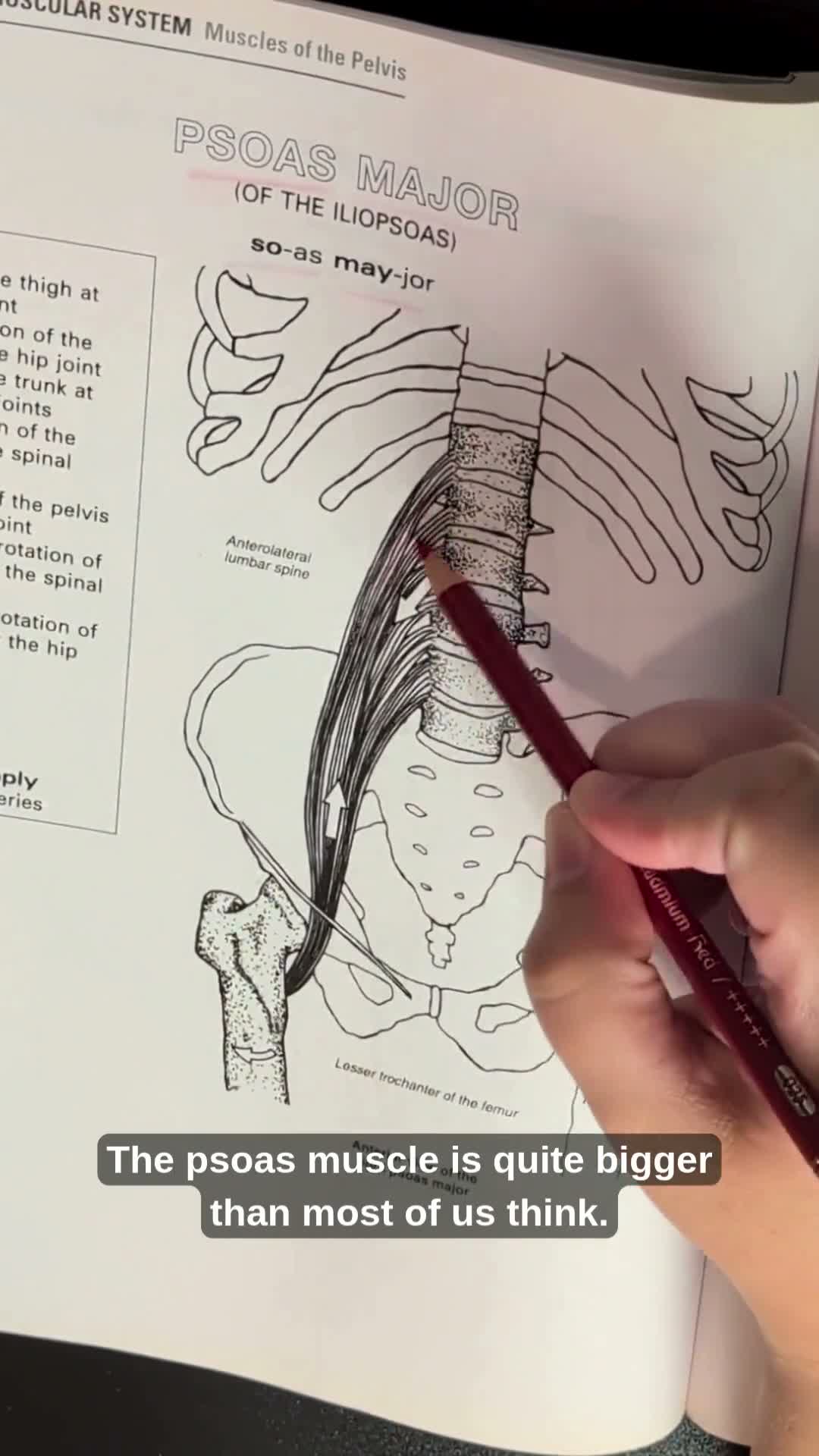
    Psoas

    1. It's a deep hip flexor! The psoas helps lift your knee toward your chest, making it important for walking, running, and climbing stairs.

    2. It connects your spine to your leg! The psoas originates along your lumbar spine and attaches to your femur, making it an important connection between your upper and lower body.

    3. It's part of the iliopsoas! The psoas major teams up with the iliacus muscle to form one of your body's strongest hip flexors.

    4. It helps stabilize your spine! Beyond moving your hips, the psoas contributes to lumbar stability and posture.

    5. Sitting keeps it in a shortened position! Since your hips are flexed while sitting, the psoas spends much of the day in a shortened position, although this doesn't necessarily mean it's permanently tight.

  • • 10/10/26

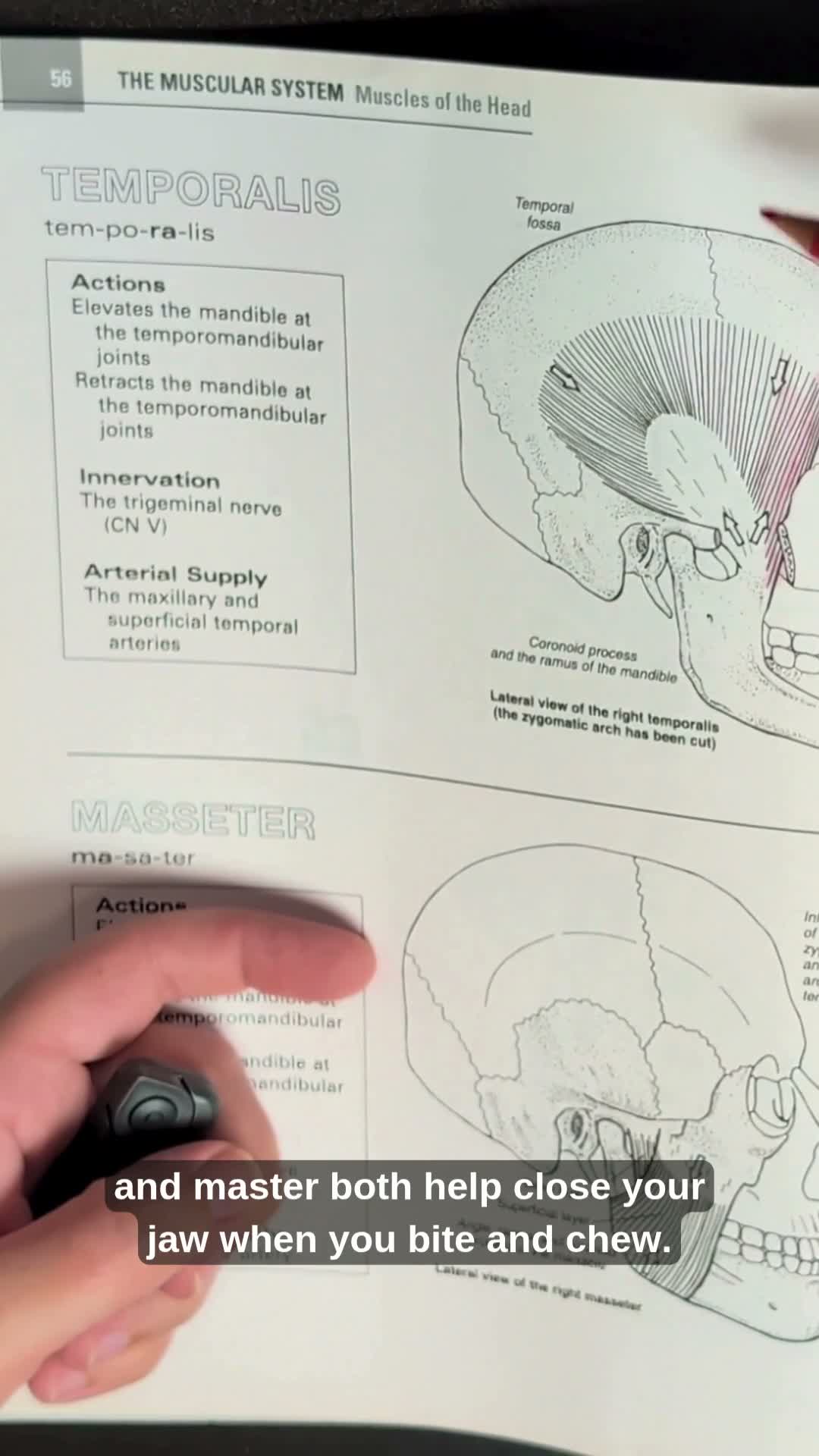
    Temporalis and Masseter

    1. They’re a chewing power team. The temporalis and masseter both help close your jaw when you bite or chew.

    2. You can feel both working. Clench your teeth and feel your temples for the temporalis, then your cheeks near the angle of your jaw for the masseter.

    3. The masseter is incredibly strong. It can generate a large amount of force for its relatively small size, making it one of the body's most powerful muscles relative to its size.

    4. They have different shapes. The temporalis is a broad, fan-shaped muscle, while the masseter is a thick, more rectangular muscle along the side of your jaw.

    5. Jaw tension can involve both. Clenching and grinding can overwork the temporalis and masseter, sometimes contributing to jaw soreness or temple-area discomfort.

  • • 10/10/26

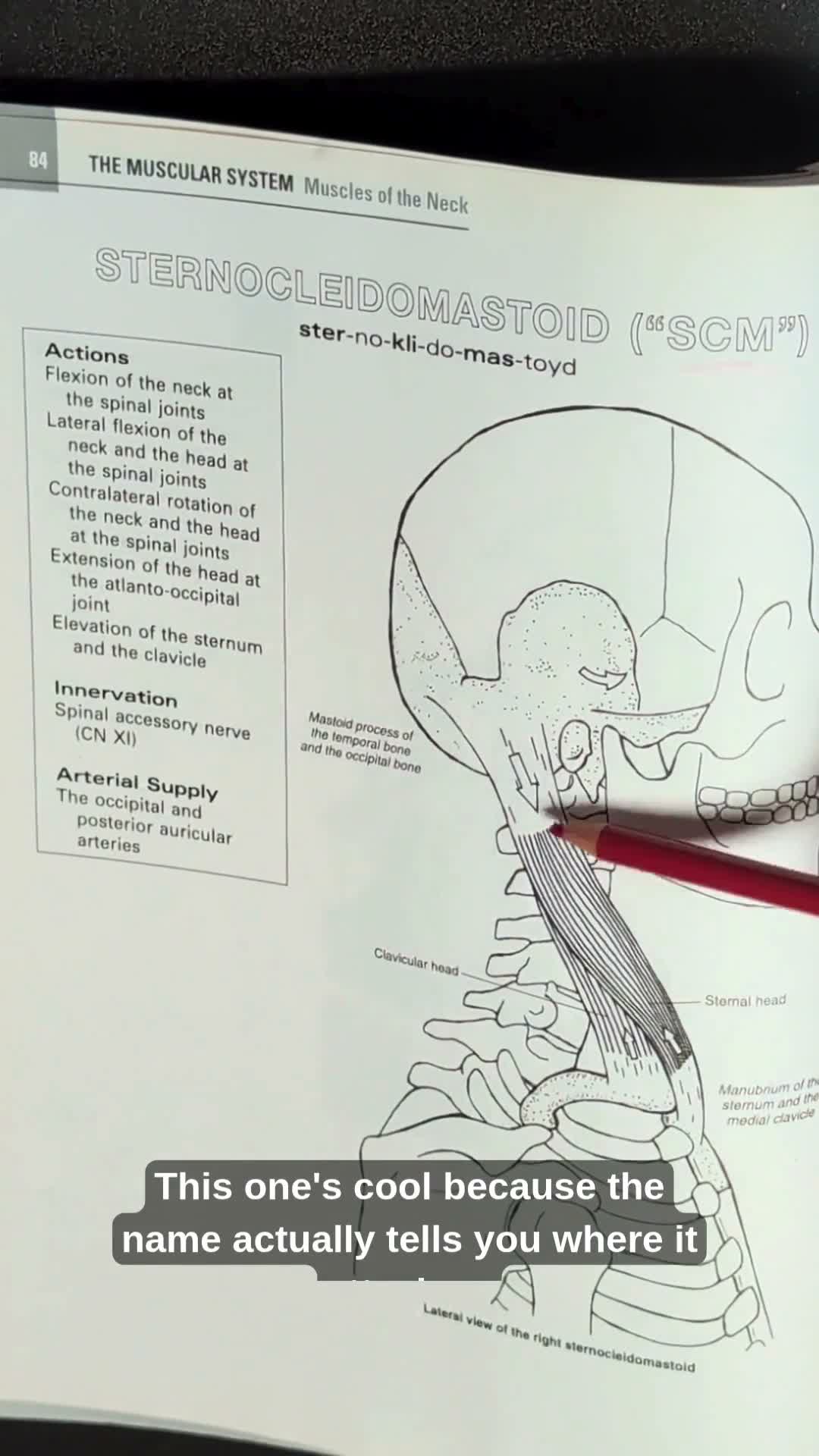
    SternoCleidoMastoid (SCM)

    • Its name tells you its attachments! Sterno = sternum, cleido = clavicle, mastoid = skull.

    • You have two! One on each side of your neck.

    • It can turn your head. When one SCM contracts, it helps rotate your face toward the opposite side.

    • Both sides can help you look up. Together, the SCMs assist with neck flexion.

    • It can become very noticeable. Turn your head to one side and you can often see the opposite SCM stand out along your neck.

  • • 10/10/26

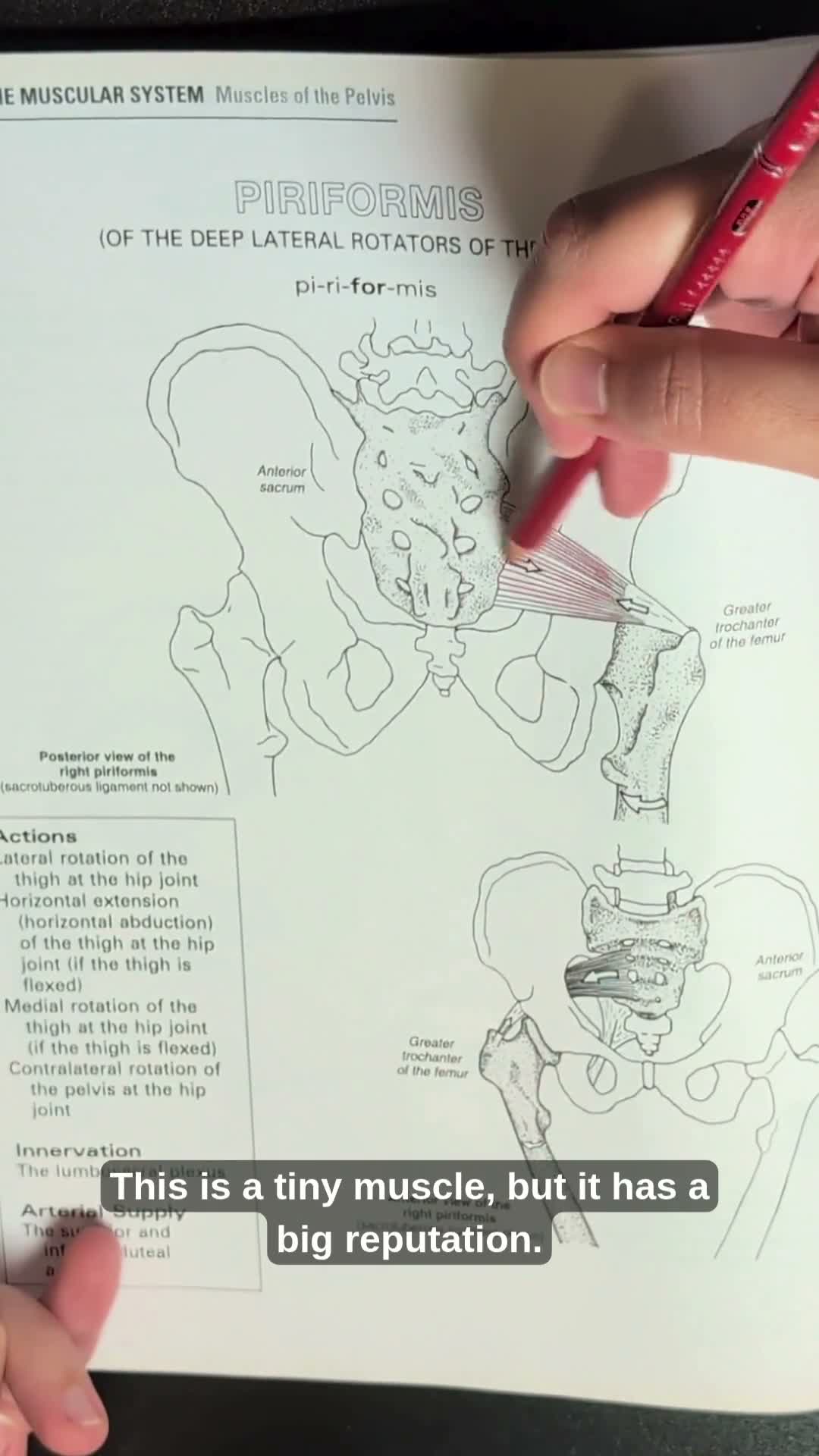
    Piriformis

    • It’s a tiny muscle with a big reputation. The piriformis is a small, deep muscle in the buttock.

    • It helps rotate your hip. Its primary action changes depending on your hip position.

    • The sciatic nerve usually passes underneath it. But anatomy varies, and in some people the nerve has different relationships with the muscle.

    • It connects your sacrum to your femur. So it literally bridges the pelvis and thigh.

    • It’s part of a team. The piriformis is one of the deep lateral rotators of the hip, working alongside muscles like the obturator internus and gemelli.

  • • 10/10/26

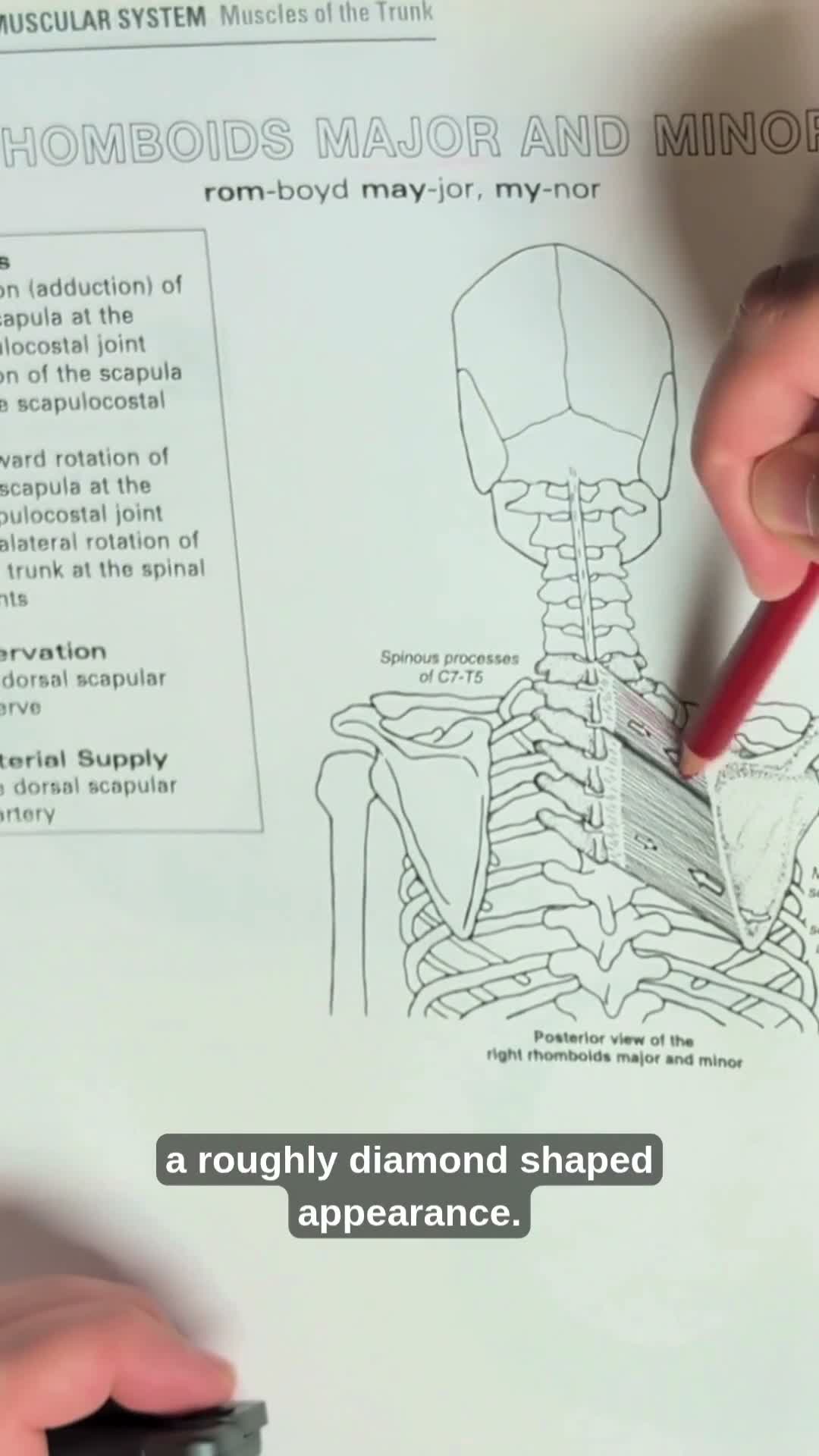
    Rhomboid Major & Minor

    • They’re named after their shape. “Rhomboid” comes from their roughly diamond-shaped appearance.

    • They connect your spine to your shoulder blade. Both help control the scapula.

    • They help pull your shoulder blades together. That's called scapular retraction.

    • They help keep your shoulder blade against your rib cage. They're important for controlled shoulder movement.

    • They work together. Rhomboid minor sits above rhomboid major, and both contribute to scapular retraction and downward rotation.

  • • 10/10/26

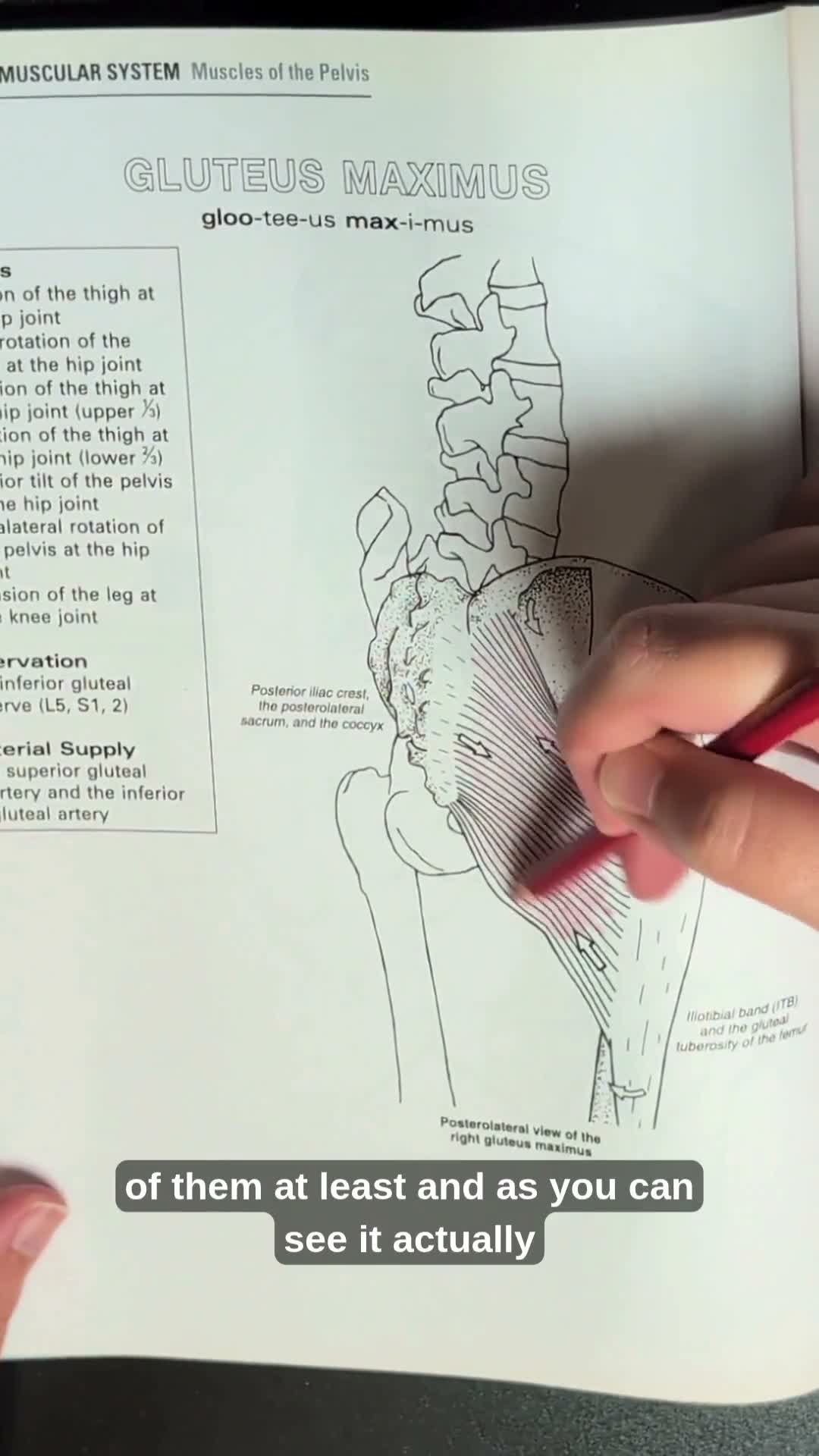
    Glut Max

    Meet the gluteus maximus, the largest of your three glute muscles and one of the body's biggest powerhouses! It helps stabilize your hips and pelvis while providing the strength needed for everyday movements like standing up, climbing stairs, and rising from a squat.